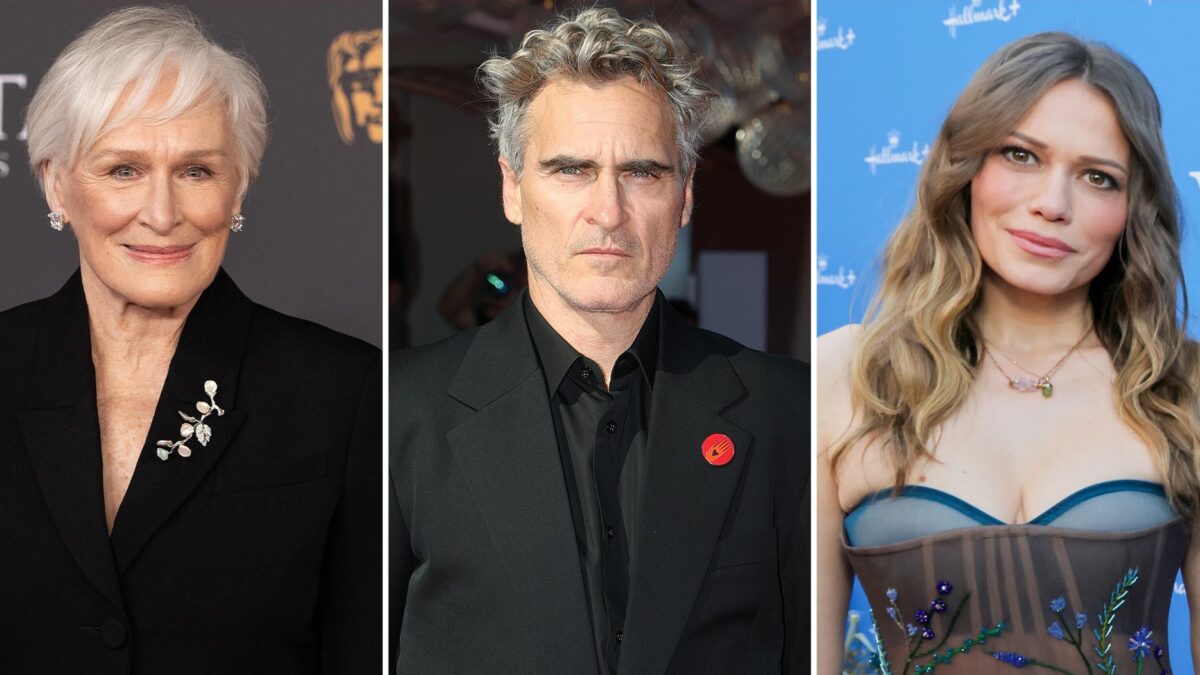
Hollywood thrives on stories of transformation, but some of the most compelling narratives come from stars who escaped the grips of cult-like communities. These aren’t just tales of rebellion — they’re stories of resilience, self-discovery, and the courage to rebuild life after deeply controlling environments. From Bethany Joy Lenz’s shocking revelations on a podcast to Glenn Close’s reflections on decades of psychological impact, these stars are peeling back the layers of their pasts to share the raw truth.
- Bethany Joy Lenz revealed spending 10 years in a “bible-based” cult while filming One Tree Hill.
- Olympic sprinter Noah Lyles grew up in a strict religious group that controlled personal relationships.
- Christine Brown of Sister Wives labeled her polygamist upbringing “cult-like.”
- India Oxenberg survived NXIVM and now advocates for cult recovery awareness.
- Actors like Joaquin Phoenix and Glenn Close reflect on the lasting impact of their experiences in fringe groups.
Bethany Joy Lenz: A Decade Lost in The Big House Family
One Tree Hill star Bethany Joy Lenz shocked fans when she opened up on her Drama Queens podcast in July 2023, revealing that she had spent ten years in what she called a “bible-based cult.” The actor joined The Big House Family shortly after landing her breakout role in 2003. Her proximity to the group became even more personal when she married the cult leader’s son. Lenz attributes filming in North Carolina as her saving grace, offering the “spatial separation” she needed to eventually leave. She later detailed her harrowing journey in her 2024 memoir Dinner for Vampires, earning respect as both a survivor and a storyteller.
Noah Lyles: From Strict Religion to Olympic Stardom
Sprinter Noah Lyles, fresh off his double medal haul at the 2024 Paris Olympics, opened up about his experience growing up in a restrictive religious community. Speaking on the “Everybody Wants to Be Us” podcast, Lyles described an environment where homeschooling was mandatory, fathers were the undisputed heads of households, and romantic relationships were tightly controlled. While his family eventually left, they later encountered another group with eerily similar dynamics, underscoring the pervasive power of such organizations.
Christine Brown: Escaping Fundamentalist Polygamy
Known for her role on Sister Wives, Christine Brown has been outspoken about the cult-like aspects of her polygamist Mormon upbringing and marriage to Kody Brown. In her 2025 memoir Sister Wife: A Memoir of Faith, Family and Finding Freedom, she recounted the moment her daughter Gwendlyn revealed that church camp girls aspired only to motherhood — a wake-up call that led Christine to question her life’s foundation. Now happily remarried and living a monogamous life, Christine’s story is a testament to the power of breaking free.
India Oxenberg: Surviving NXIVM’s Dark Web
The NXIVM cult has become infamous for its manipulation and exploitation of members, and India Oxenberg was one of its most publicized survivors. Groomed within the sinister subgroup “DOS” by founder Keith Raniere, she escaped in 2018 and has since dedicated her life to shedding light on the dangers of coercive groups. Her memoir, Still Learning, alongside the docuseries Seduced: Inside the NXIVM Cult, offers chilling insights into life inside and the long road to healing.
Joaquin Phoenix: Children of God’s Early Impact
Joaquin Phoenix’s childhood was shaped by his parents’ involvement with Children of God, a group notorious for its controversial practices. In a 2014 interview with Playboy, Phoenix reflected on his family’s time in the cult during the 1970s, saying, “Cults rarely advertise themselves as such.” While his parents eventually left, he acknowledges the innocence of their initial involvement and the group’s eventual descent into darker practices, which also impacted celebrities like Rose McGowan.
Glenn Close and Emily Watson: Childhood Trauma in Fringe Groups
Glenn Close spent 15 years in the Moral Re-Armament movement, subject to strict moral and spiritual codes. “You basically weren’t allowed to do anything, or you were made to feel guilty about unnatural desires,” she told The Hollywood Reporter in 2014. Similarly, Emily Watson’s time in the School of Economic Science (SES) left her grappling with fear-based discipline, which she only escaped in her late 20s. Both actors highlight how early exposure to controlling ideologies can shape adult perspectives and challenges.
What This Means for You
These stories aren’t just Hollywood gossip — they’re cautionary tales about the risks of manipulation and control. Whether it’s religious, philosophical, or personal, cult-like environments thrive on isolation, fear, and dependency. The stars who’ve escaped these situations remind us that it’s possible to rebuild and find empowerment on the other side.
If you or someone you know is in a controlling group, resources like Cult Education Institute and support networks like the International Cultic Studies Association (ICSA) offer pathways to understanding and recovery. The courage to leave is immense, but these celebrity accounts prove that freedom and healing are attainable.
Frequently Asked Questions
What defines a cult?
Generally, cults are characterized by high control over members, exploitation, and a charismatic leader who demands loyalty. They often isolate members from outside influences and use fear or guilt to maintain obedience.
How can someone escape a controlling group?
Leaving a cult or controlling community often requires external support, such as counseling, legal assistance, or intervention from loved ones. Seeking organizations dedicated to cult recovery can provide critical resources.
What long-term effects do cult experiences have?
Survivors often grapple with trauma, trust issues, and challenges reintegrating into society. Therapy and support from others with similar experiences can help in the recovery process.
Are there any warning signs of a cult-like group?
Common red flags include a leader demanding absolute loyalty, isolation from family and friends, financial exploitation, and strict rules governing personal relationships or behavior.
Which resources can help victims of cults recover?
Organizations like the International Cultic Studies Association (ICSA) and Cult Education Institute offer support groups, educational resources, and counseling for survivors of high-control groups.