This article contains affiliate links. When you purchase through these links, we may earn a commission — at no extra cost to you.
In the retail world, where fast fashion and designer labels reign supreme, there’s an often overlooked truth about the exploitation, social hierarchies, and pressures inherent in the industry. This truth is at the heart of Boots Riley’s new film, I Love Boosters, and it’s resonating deeply with anyone who’s ever clocked in for a low-paying retail job. The absurdist comedy, starring a powerhouse cast including Keke Palmer, Naomi Ackie, Taylour Paige, Poppy Liu, and Eiza González, turns the seemingly mundane act of shoplifting into a bold and stylish revolt against capitalism’s empty promises.
- I Love Boosters is a satirical take on fashion and capitalism’s exploitation, starring Keke Palmer and Naomi Ackie.
- The film highlights systemic issues in retail work, including poor pay, social hierarchies, and exploitation of workers.
- Each character represents a facet of oppression tied to the fashion industry, from factory workers to front-of-house employees.
- Boots Riley combines magical realism and heist adventure to explore the contradictions of fashion as both expression and oppression.
Retail Workers’ Rebellion
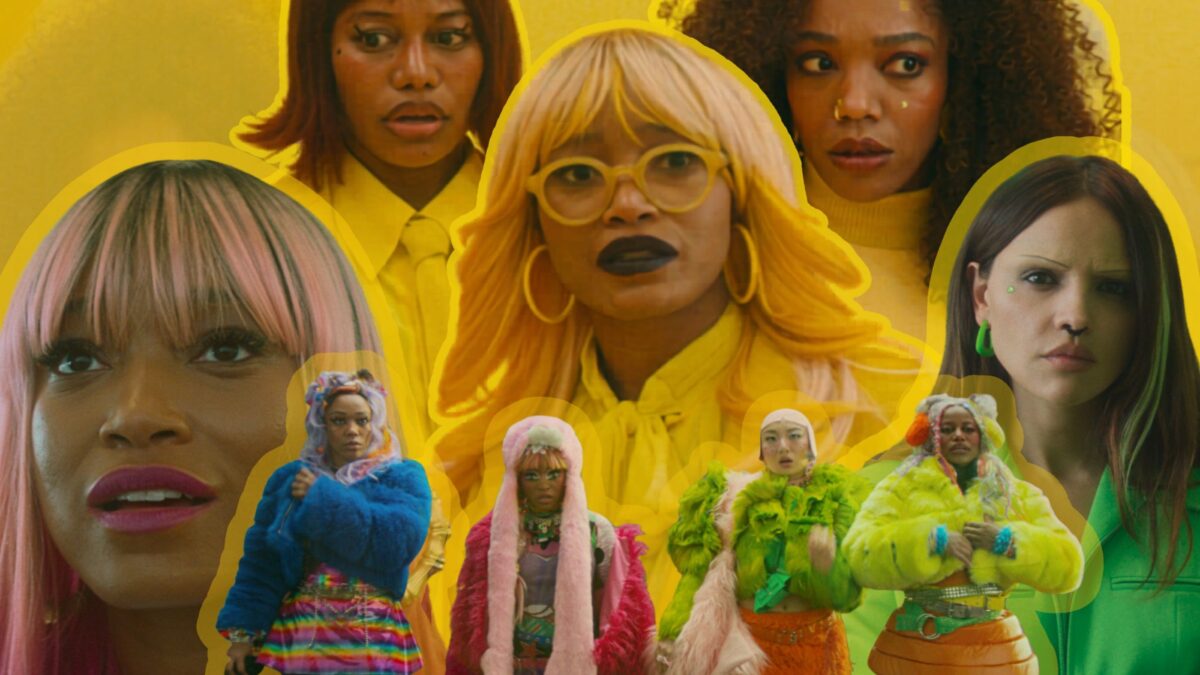
At its core, I Love Boosters is a Robin Hood-style tale of a group of young women, aptly named the Velvet Gang, who steal from high-end retailers and sell the goods back to their community at discounted prices. It’s a story of survival, camaraderie, and resistance. The gang isn’t just shoplifting; they’re rebelling against a system that exploits workers, perpetuates inequality, and commodifies identity.
Keke Palmer’s character, Corvette, is a designer with a passion for fashion that fuels her boosting business. Her motivations, however, aren’t purely aesthetic. Her gang members, including Naomi Ackie’s Sade, Taylour Paige’s Mariah, Poppy Liu’s Jianhu, and Eiza González’s Violeta, each bring their own stories of systemic exploitation to the fold. Jianhu’s backstory as a Chinese factory worker and Violeta’s role as a store employee fighting to unionize highlight the multiple layers of oppression tied to the fashion industry.
Fashion, Capitalism, and Identity
As Naomi Ackie eloquently stated during an interview, “The thing about fashion is that it’s a microcosm of something bigger.” Fashion isn’t just about clothes; it’s about power, exploitation, and the cultural narratives we buy into. Ackie highlighted how the industry exploits workers, from the carbon footprint of production to the low wages of front-line employees, particularly Latine workers who are overrepresented in these roles.
The conversation also delved into how fashion sells an identity. Ackie noted, “We as consumers have this idea that if I buy this skirt, I’m going to be a different woman.” Keke Palmer added, “People do actually look at you differently and perceive you differently depending on what you wear in fashion. It kind of works, and it’s also a problem.”
This duality — fashion as self-expression and systemic oppression — is at the heart of the film’s narrative. It challenges viewers to reconsider the promises capitalism makes about identity and success, all while delivering a visually stunning and comedically sharp storyline.
Magical Realism Meets Anti-Capitalist Satire
Boots Riley’s direction brings a fantastical flair to the bleak realities of retail work. The film’s cinematography by Natasha Braier and costumes by Shirley Kurata create a vibrant, surreal world that contrasts sharply with the harsh truths the characters face. The contradictions in the film aren’t just artistic; they’re the point. The juxtaposition of bright visuals with dark messaging underscores the absurdity of the system the Velvet Gang is rebelling against.
In essence, I Love Boosters is more than a heist movie or a comedy. It’s a call to action, a snapshot of systemic inequality, and a hopeful reimagining of what resistance can look like. It’s a reminder that sometimes, survival itself is an act of rebellion.
What This Means for You
If you’ve ever worked in retail or felt the pressure of consumer culture, I Love Boosters is a film that will resonate. It challenges the narratives we’ve been sold about fashion and identity, offering a bold critique of capitalism disguised as a heist movie.
Consider how your purchasing choices contribute to systemic issues, and think about supporting brands with ethical practices. The film also highlights the importance of solidarity—whether it’s in your workplace or your community. Use this as a reminder to advocate for fair wages and humane working conditions wherever you can.
Frequently Asked Questions
What is I Love Boosters about?
The film follows a group of retail employees who rebel against exploitation in the fashion industry through shoplifting, blending comedy, drama, and social commentary.
Who stars in the movie?
The cast includes Keke Palmer, Naomi Ackie, Taylour Paige, Poppy Liu, and Eiza González, with Demi Moore as the villainous CEO.
How does the film critique capitalism?
Through its portrayal of systemic exploitation in the fashion industry, the movie explores how capitalism commodifies identity and perpetuates inequality.
Is the film based on real events?
While the story is fictional, it draws from real issues faced by retail workers and the broader implications of consumer culture.